DISCOUNT CODES
Redesigned Universe's discount code features, increasing client revenue from promotions by 7%
I discovered that Universe's discount code logic was costing clients revenue. I analyzed usage patterns and spoke with client success teams to define the gaps, then redesigned the experience to streamline workflows and introduce essential functionality. This enabled clients to run promotions more effectively and protect revenue.
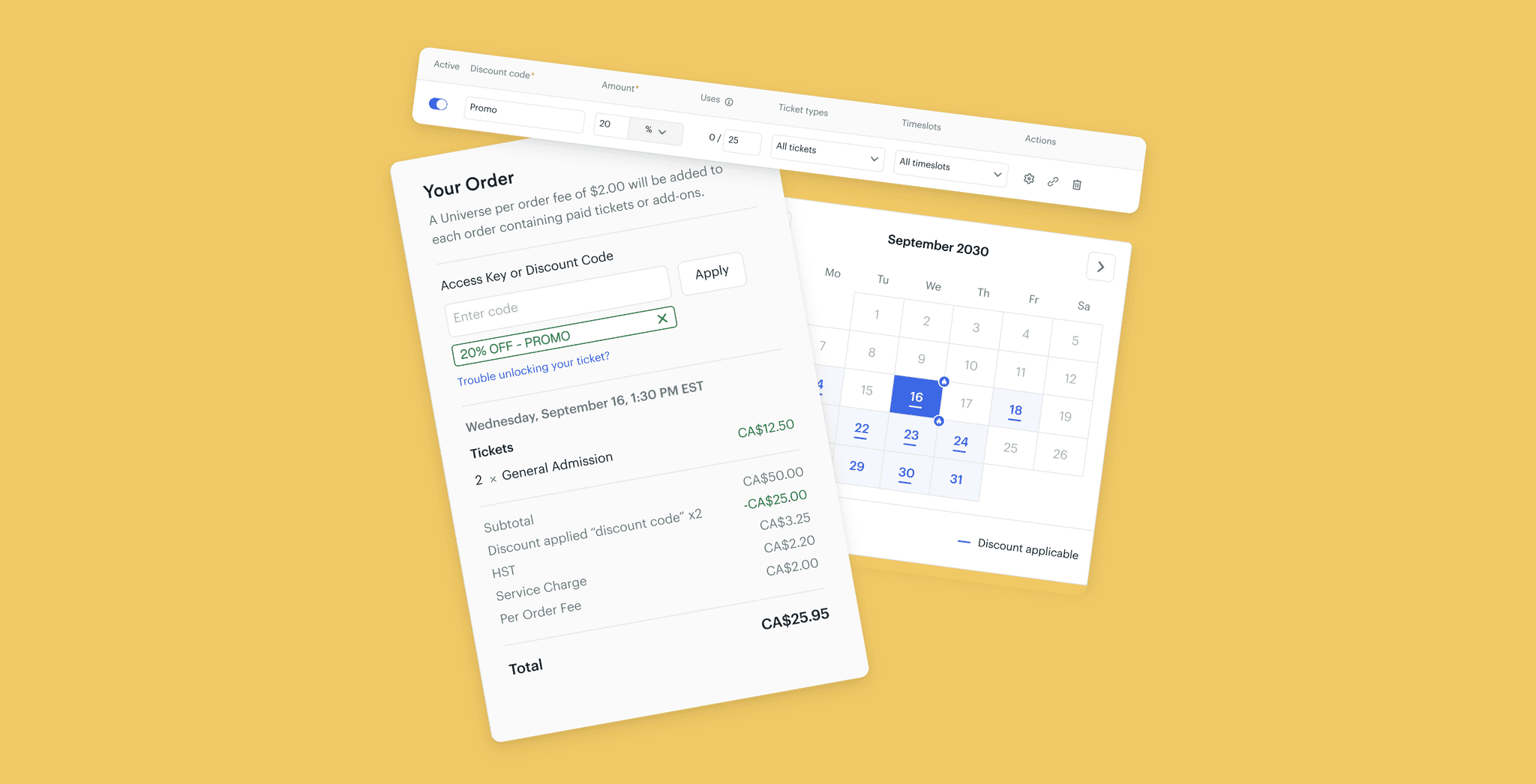
WHY THIS MATTERED
Timed-entry event hosts were losing revenue.
Some tried renegotiating their contracts. Others relied on support-driven workarounds that slowed our teams and introduced bugs, signalling an urgent need for a scalable solution.
KEY RESULTS
Streamlining
Collapsed account-level and event-level discount codes for a more user friendly, unified experience.
Automation
Enabled the automation of code activations, saving clients and support teams time.
Visibility
Increased visibility for ticket buyers, increasing revenue for unpopular timeslots, while saving ticket buyers money.
ROLE
Lead Product Designer
TIMELINE
7 months
TEAM
Product Manager
5 Frontend developers
PROCESS
User journeys | Interviews
Usability testing | Iterations
Updating design system
SKILLS
End-to-end Product Design
Problem validation
Hands-on shipping
WHAT I OWNED
Discovery, Usability Testing, Shipping
I aligned with my PM on direction by listing what we knew, what we assumed, and what we didn't know about the problem. This informed our interview and research approach. I then led usability testing to ensure the problem solved pain points, and worked directly with developers to help build and ship a viable product.
PROBLEM
Fragmented and rigid discount codes made promotion management impossible without workarounds.
Customers could not target discounts to specific dates or time ranges, causing missed promotion opportunities and frustration during key sales periods. This limitation risked revenue loss, and the system complexity forced account-level and event-level codes to conflict instead of working together.
APPROACH
Research and design process
RESEARCH
I looked at how many discount codes were created for long running events (6 months) to gauge performance, invited clients to demonstrate their most common tasks to identiy pain points, and interviewd internal teams to gather pain points from a holistic angle.
DESIGN
I collaborated with design, product, developers and customer success teams to gain feedback on iterations, conducted unmoderated user testing to get quantitative feedback on flows, and worked closely with developers to ship milestones and QA for smoother deployment.
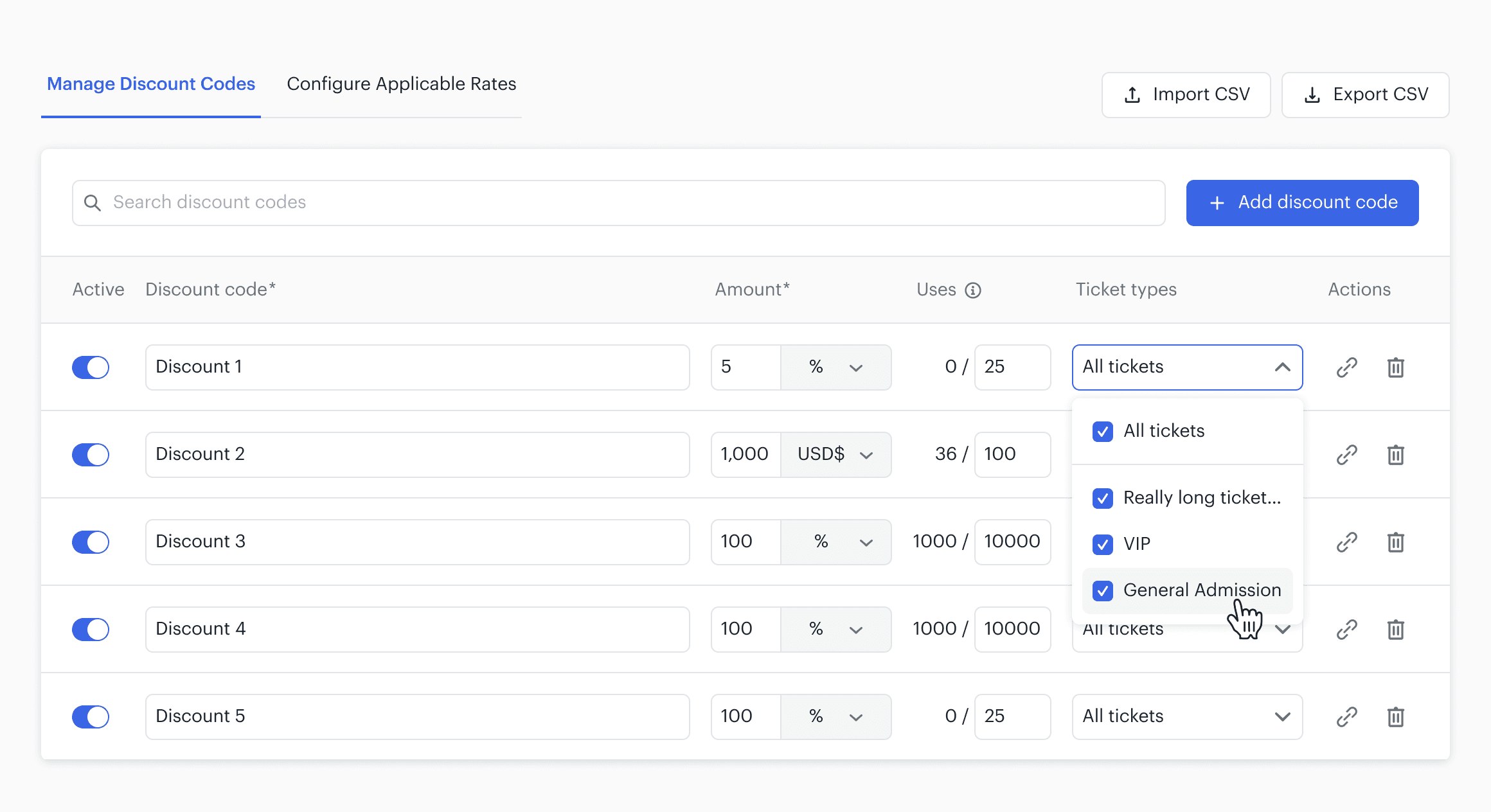
BEFORE
Unscalable architecture
Discount codes could only target specific ticket types, which broke down as Universe shifted to long-running attractions. Performance degraded as a result, bugs threatened revenue, and both clients and support resorted to fragile workarounds that required ongoing engineering support.
Global codes lived in a separate system and could silently override event-level discounts, with no way to control which events they applied to. Tracking results required simulating a buyer flow where codes were invisible, making promotions hard to validate and impossible for customers to discover organically.
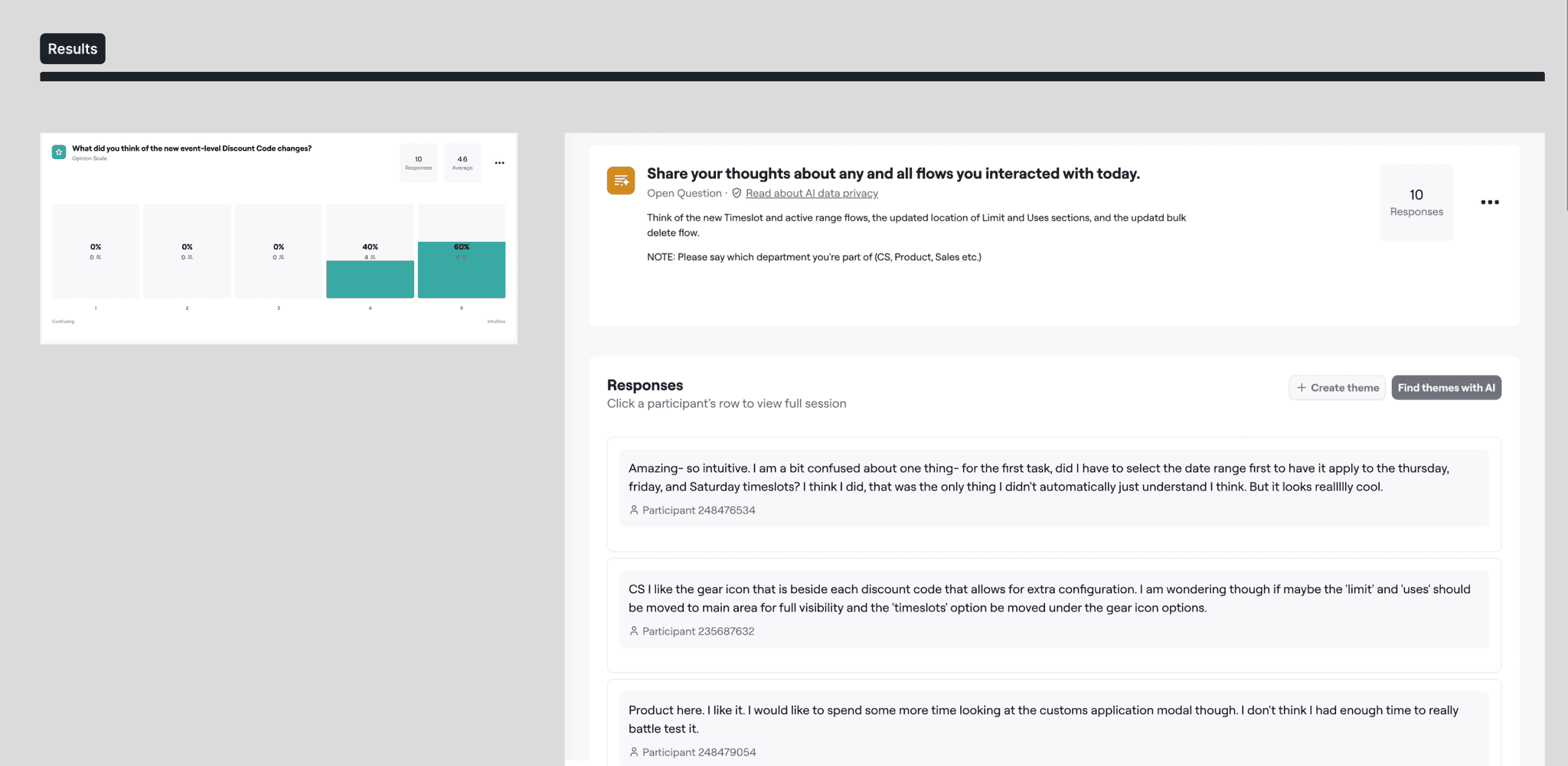
CONSTRAINTS AND TESTING
Validating with clients and internal teams.
INTUITIVENESS
When we expanded discount codes, we introduced new buttons and interactions that required testing to validate. After 3 rounds of testing and feedback, we streamlined the final product to be more intuitive.
PERFORMANCE
As we tested, we noticed discount codes weren't performing well. Long loading times and other bugs emerged. I worked with developers to diagnose the problem, helping to steer design decisions.
AFTER
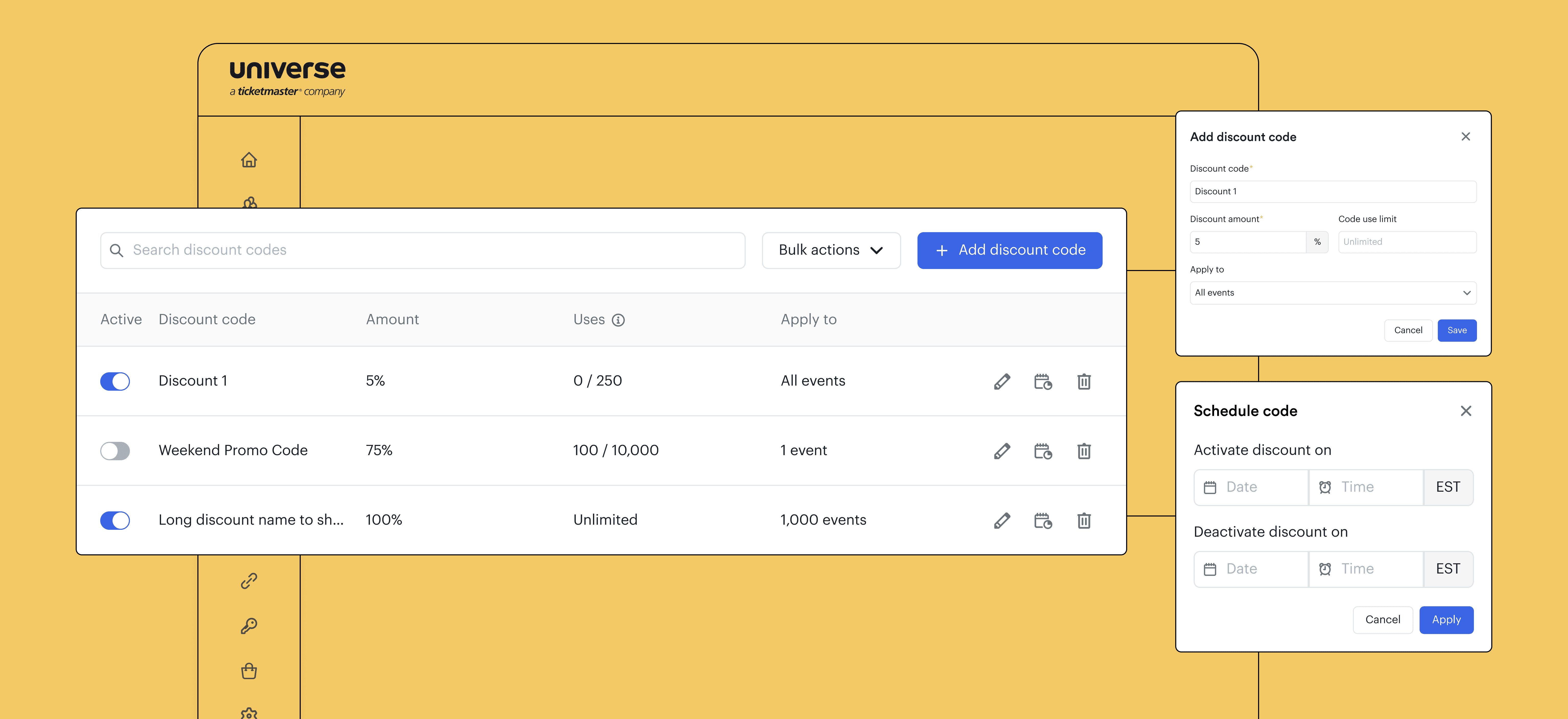
Combined discount codes with expanded functionality and unified visual language for an intuitive user experience.
I leveraged user testing, journey data, and user interview to validate our approach. We found that by combining both discount code layers, we removed the confusion most clients hand. I also redesigned the flows in such a way that they caused less performance issues and bugs, making discount codes a powerful tool for event promotions rather than one working against the user.
ALL IN ONE
We unified discount code management so account-level and event-level access routed to the same place, eliminating confusion and preventing costly setup mistakes.
AUTOMATION
We enabled scheduling for discount codes so teams no longer had to activate and expire promotions manually, saving hours of operational time and eliminating after-hours work.
TICKET BUYER DISCOVERABILITY
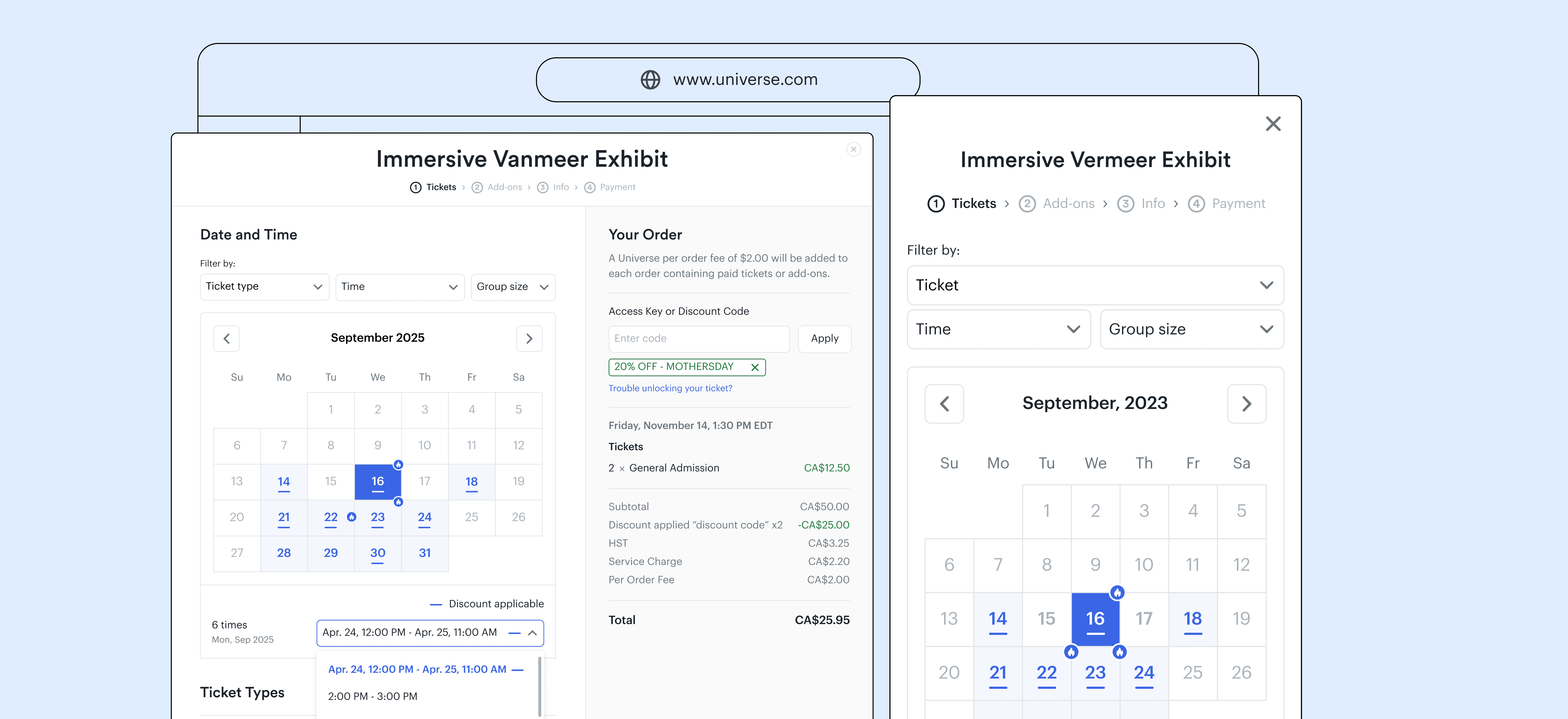
We exposed discount indicators directly in checkout so buyers could see available promotions instantly, driving higher conversion without extra clicks.
PERFORMANCE
We moved edits into focused modals to prevent conflicting changes, reduce errors, and significantly improve performance at scale.
IMPACT
" height="20px" id="uxdlBAd7X" width="20px"/></svg>)
" height="20px" id="AqGU0CTSh" width="20px"/></svg>)
" height="15px" id="xlSDvxJt3" transform="translate(0 1.685)" width="20px"/></svg>)
What I learned.
I learned the value of design and development alignment with this project. I saw what separating these departments can result in when exploring legacy discount codes, for even if they have the same goal, the approach can vary in significant ways and affect the end user.